




Stakeholders Ecstatic over B’Odogwu Portal, As Customs Promises to Address Teething Issues
… Hints on Re-Introduction of 4% FOB Levy on Imports
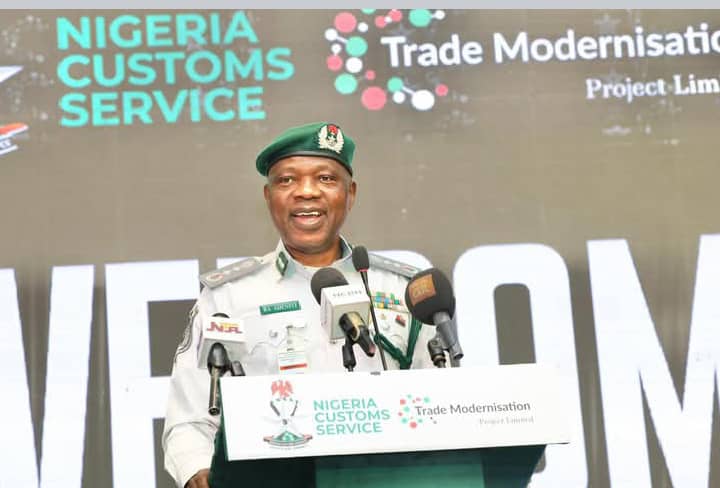
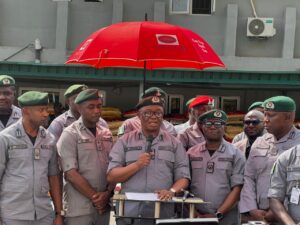
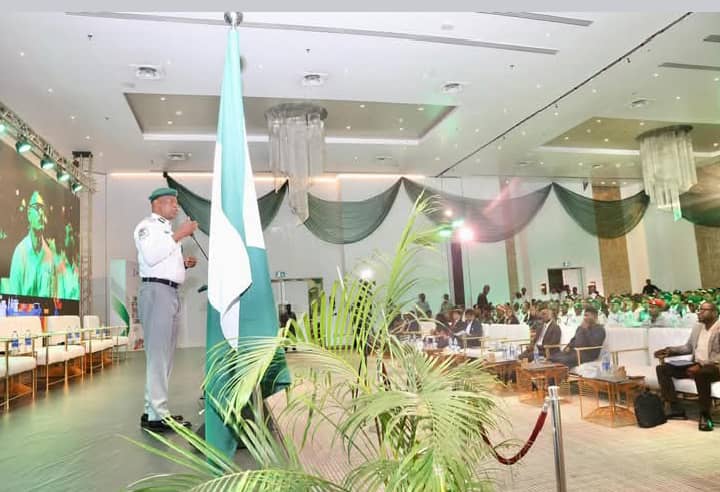
CG of Customs Adeniyi MFR giving his Keynote Address
B’Odogwu, the recently introduced indigenous Modernisation Cargo Clearance Portal of the Nigeria Customs Service (NCS) has continued to gain massive acceptability, as stakeholders unanimously commended the service on the positive strides so far attained by the scheme.
This commendations came on Monday July 21, 2025, during a town-hall meeting with stakeholders on B’odogwu Clearance, organised by the Nigeria Customs Service to review the performance of the trade portal, ascertain the progress made so far and as well get first-hand information on areas of challenges where the service can improve upon.
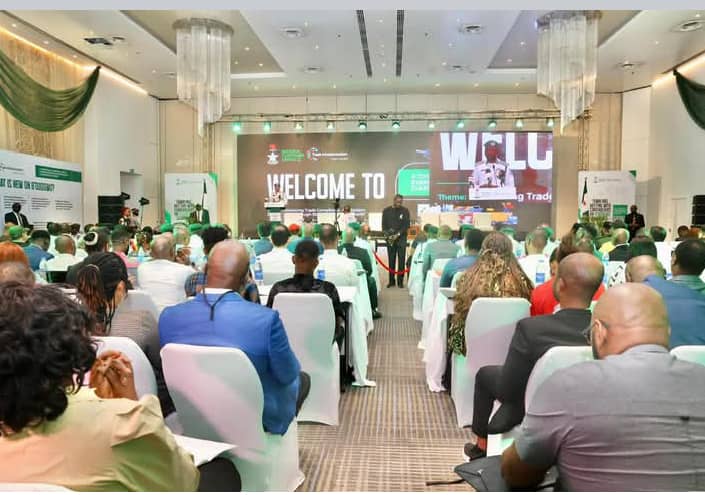
The well attended all inclusive and participatory meeting held at the Marriott Hotel in Ikeja Lagos, which witnessed almost all relevant stakeholders present with highly engaging momentum, had most of the industry operators applauded the indigenous trade scheme for its transparency, improved clearance time, accessibility, unambiguousness. They stated that it has brought more transparency, improved digital tracking of transactions, and wiped out all downtime that had been synonymous with the NICIS II.
In his keynote address, the elated Comptroller General of the Customs service, Bashir Adewale Adeniyi, MFR, who also join other voices to tag B’Odogwu system as a ‘game changer’ in the port clearance process, declared that aside the present few negatives, the positives outweighed, pledging that the posit aspect would ginger the workforce to improve the system better than it is presently.
However, some commented on issues being faced with the modernisation platform. Some of the listed teething issues still affecting the B’Odogwu system according to the stakeholders included migration from NICIS II to B’Odogwu, banks’ inability to make amendments on B’Odogwu, and classification of HS Code between the Standards Organization of Nigeria (SON) and the National Agency for Food and Drug Administration and Control (NAFDAC). Some also harped on the issues of ambiguity relating to Tin number vis a vis personal email with FIRS, as well as no provisions for form ‘M’ extension, among others, which the service promised to look into.
The importers, freight forwarders, shipping agencies, terminal operators, financial institutions, sister agencies, and other relevant stakeholders were all in attendance for the all-important discussion on the present workings of B’Odogwu technological modernization and how it can be improved upon. The Theme: “Enhancing Trade Compliance and System Optimization Through Stakeholder Engagement”.
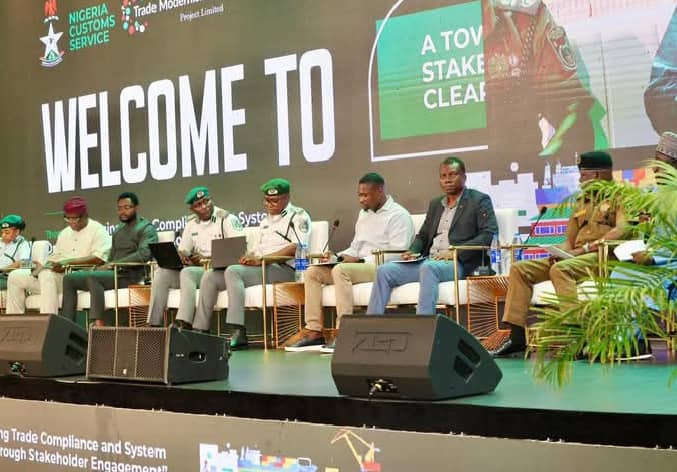
Set of panelist in one of the interactive session
The Comptroller-General of Customs, Adewale Adeniyi, MFR also during his keynote address, hinted on customs strong consideration to reinstate the 4% FOB levy that was suspended due to stakeholder’s outcry earlier in the year.
This consideration according to him is in the backdrop of the huge capital intensive nature occasioned by the modernisation and digital transformation programmes of the service for effective trade processes.
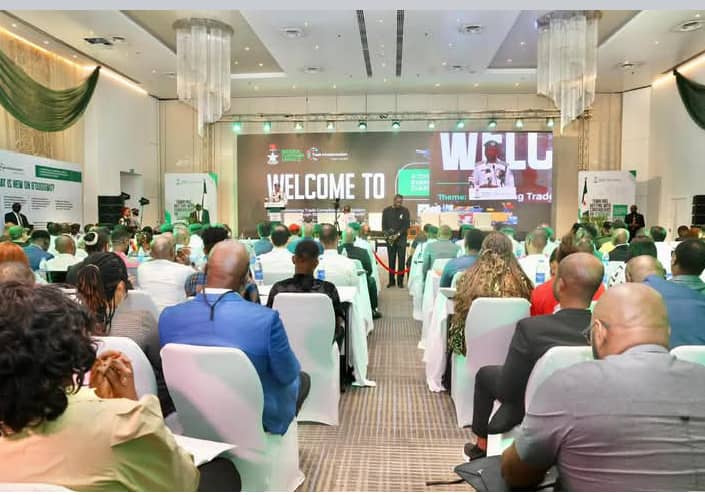
Stakeholders-at-the-BOdogwu-Town-Hall-Meeting
He noted that, as the Chairperson of the World Customs Organization (WCO) Council, it behoves on Nigeria to lead the way in technology applications to enable maximum trade facilitation.
“We have no choice in the payment of the 4% FOB because it is needed by the Customs to fund the huge technology and modernization programme it has embarked on”, Adeniyi said.
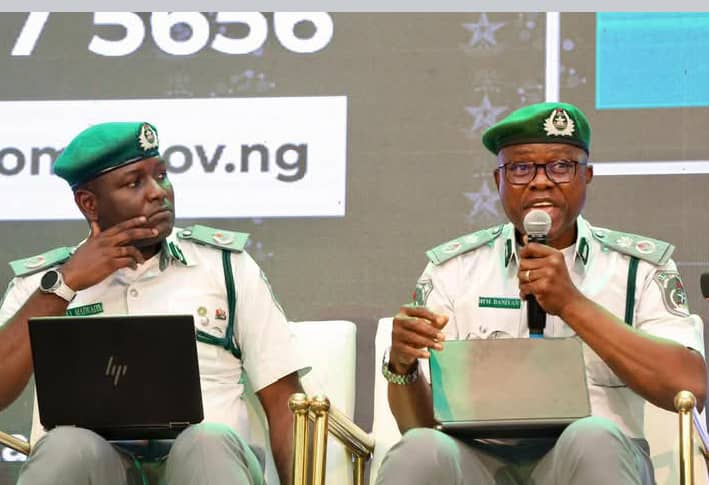
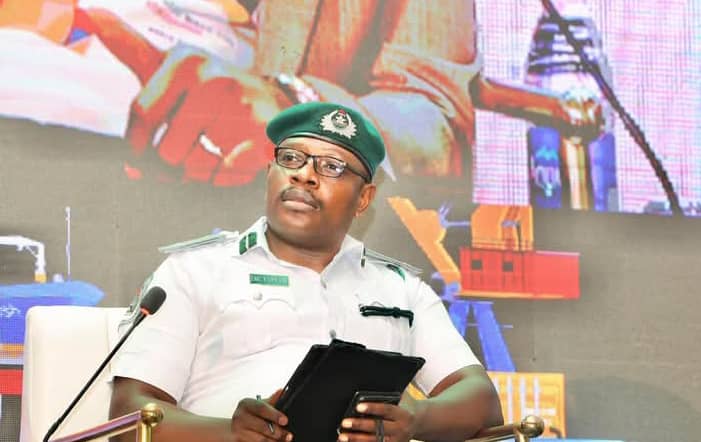
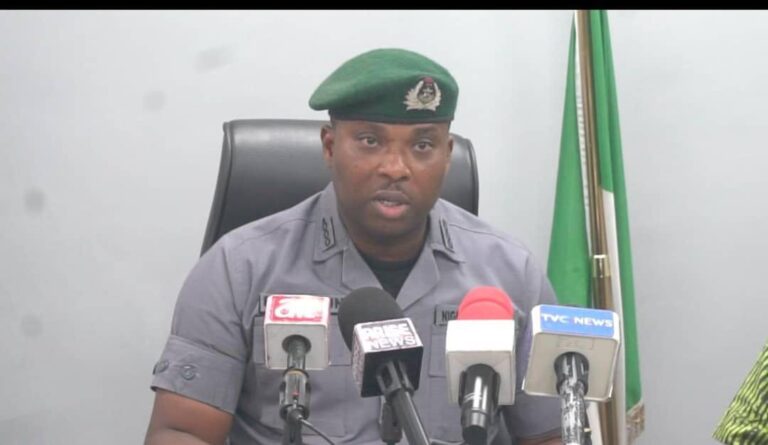
Comptroller TM Daniyan, CAC, PTML Command and the Pilot officer of the scheme giving an address in one of the interactive session
The CGC further stated that, “This is not a new idea. It was embedded in the 2023 Customs Act under the administration of late President Muhammadu Buhari. We paused to consult stakeholders, and now we are here to say that it must go forward. In Yoruba parlance, ‘the soup that is sweet is as a result of money”.
While he clarified that the 4% FOB charge will replace the existing 1% Comprehensive Import Supervision Scheme (CISS) fee, without imposing additional burdens on importers, Adeniyi said, the levy is designed to support the significant financial investment needed for a robust modernisation schemes of the service, noting that transition from NICIS II to indigenously developed B’Odogwu is not cheap.
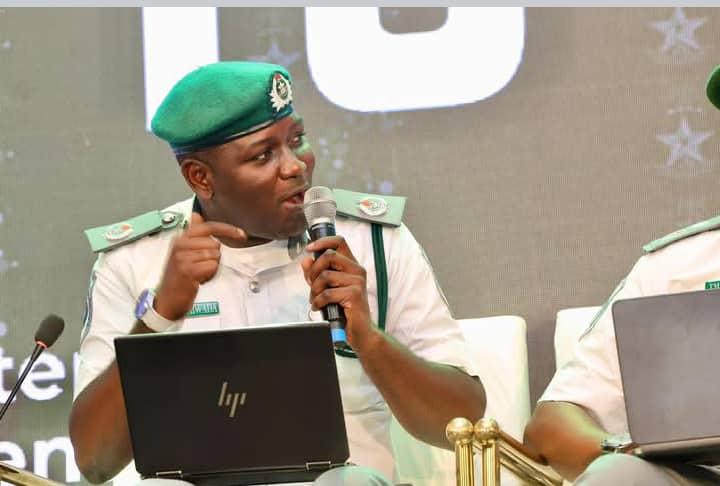
AC Maiwada, NPRO and MC of the event anchoring one of the interactive session
Adeniyi also touch on the present status of Nigeria with the attainment of WCO Council Chairman which requires more to be done.
“Now that Nigeria is the Chair of the World Customs Organization (WCO) Council, we have a duty to demonstrate global leadership by showcasing B’Odogwu as a homegrown technological innovation capable of transforming Customs operations,” he added. It is B’Odogwu to the world.”
Earlier in her welcome address, the Deputy Comptroller-General in charge of ICT and Modernization, Kikelomo Adeola psc(+), assures of the service commitment to collaborate with stakeholder in driving a systemic reform.
In her words, “This town hall is more than an event-it’s a strategic platform to engage you, our valued partners, on the B’Odogwu Clearance System. Since its phased rollout, it has demonstrated significant potential to improve cargo visibility, clearance speed, and revenue generation”.
While acknowledging current user challenges with the system, DCG Adeola assured attendees that these were being addressed through ongoing monitoring, feedback, and targeted interventions. She announced that the NCS will launch a series of virtual workshops post-event to provide hands-on guidance to importers, brokers, and agents on trade documentation, payment integration, and system troubleshooting.
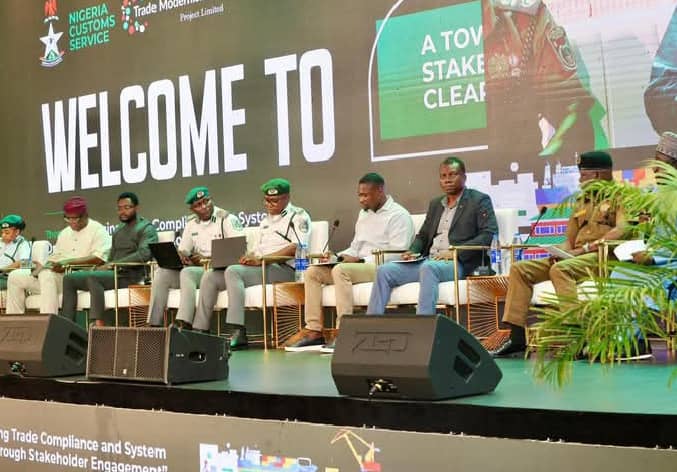
The engagement included live demonstrations of the B’Odogwu platform’s capabilities, panel discussions, and a Q&A session that allowed stakeholders to provide feedback directly to Customs leadership.
“The digital future we envision is one where all actors in the trade chain are empowered, connected, and accountable,” Adeola concluded.
The event underscored the Nigeria Customs Service’s determination to simplify processes, improve trade facilitation, and align Nigeria’s customs practices with global best standards while leveraging homegrown innovation to do so.
However, speaking after a panel discussion on the issues confronting the B’Odogwu platform, Comptroller-General of Customs, Bashir Adewale Adeniyi, stated that it was the reason for the Town Hall meeting, to give stakeholders opportunities to provide feedback on the B’Odogwu system.



+ There are no comments
Add yours