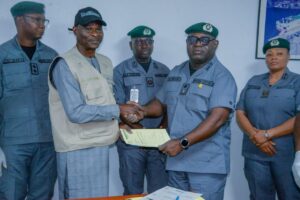
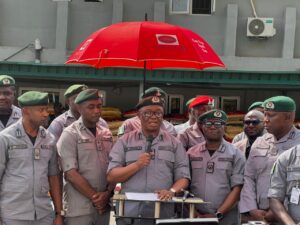





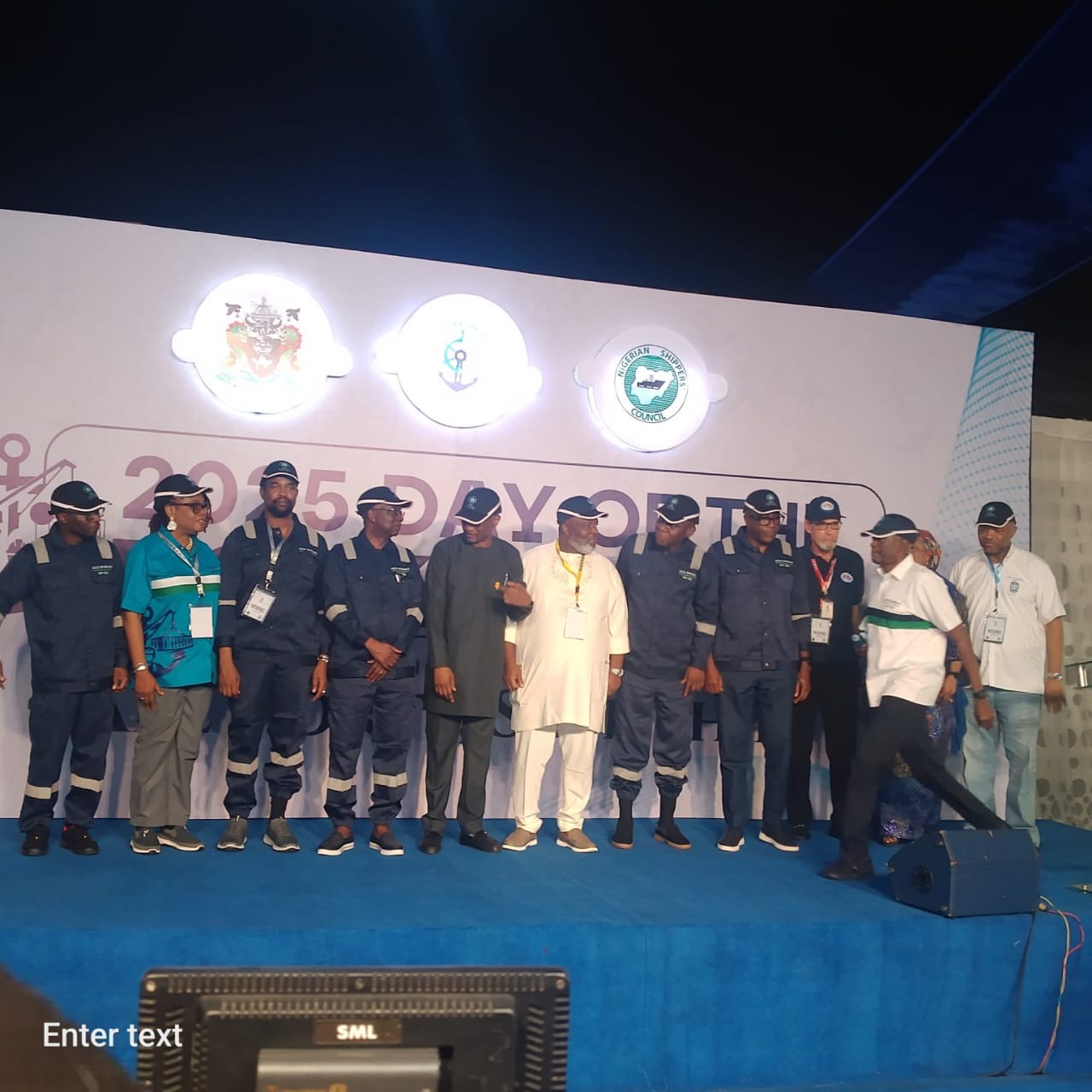
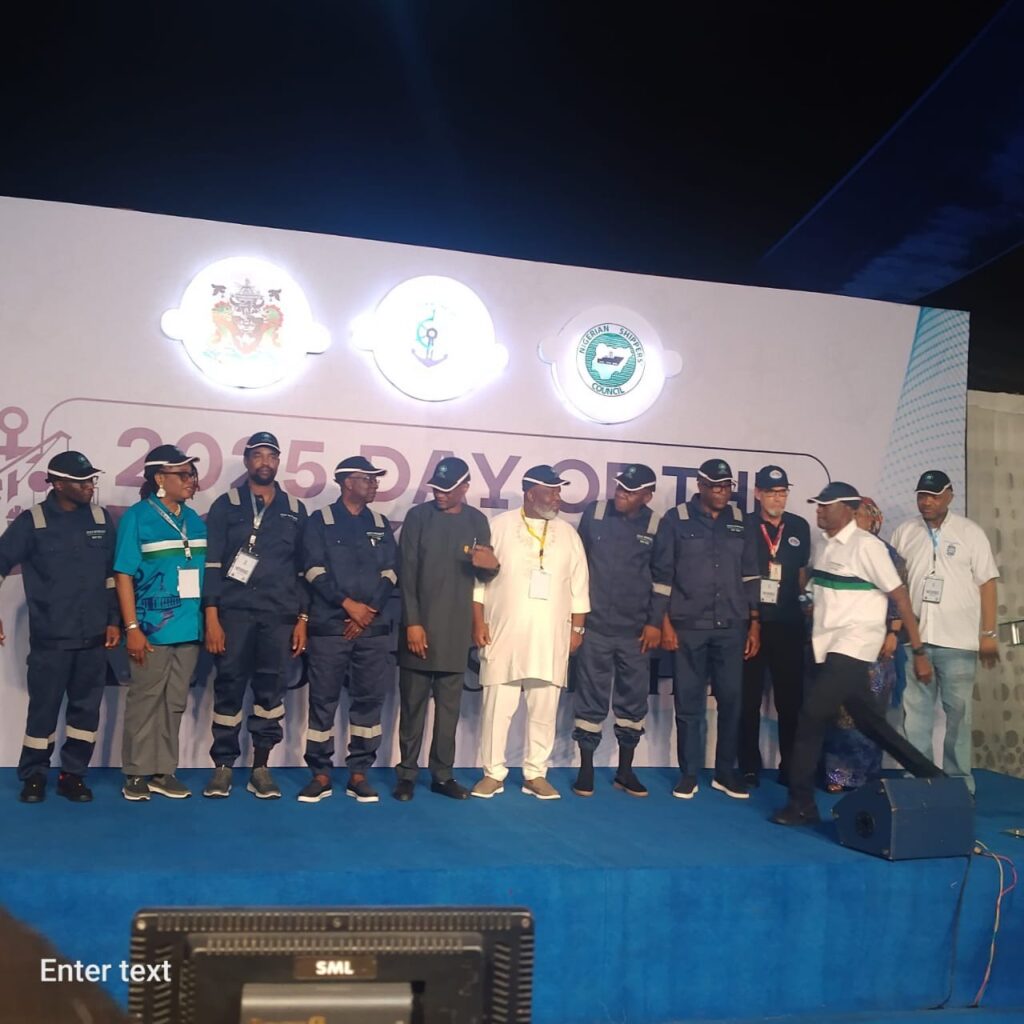
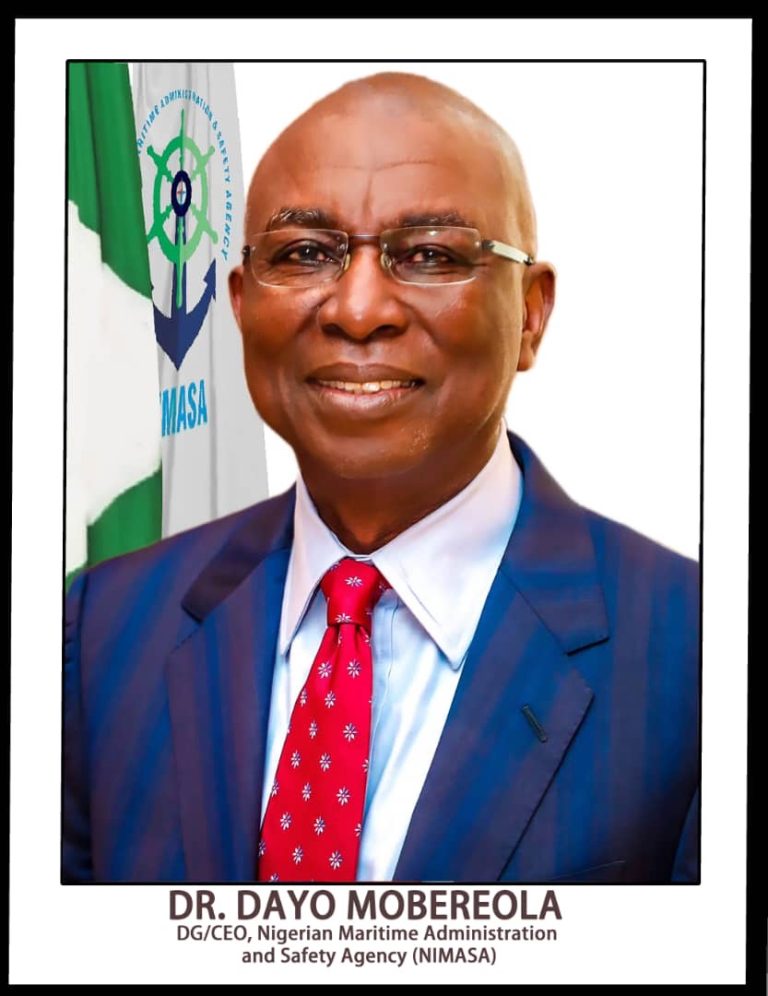
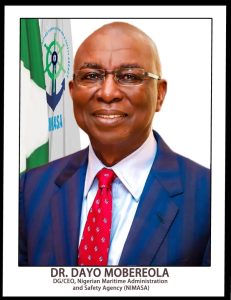
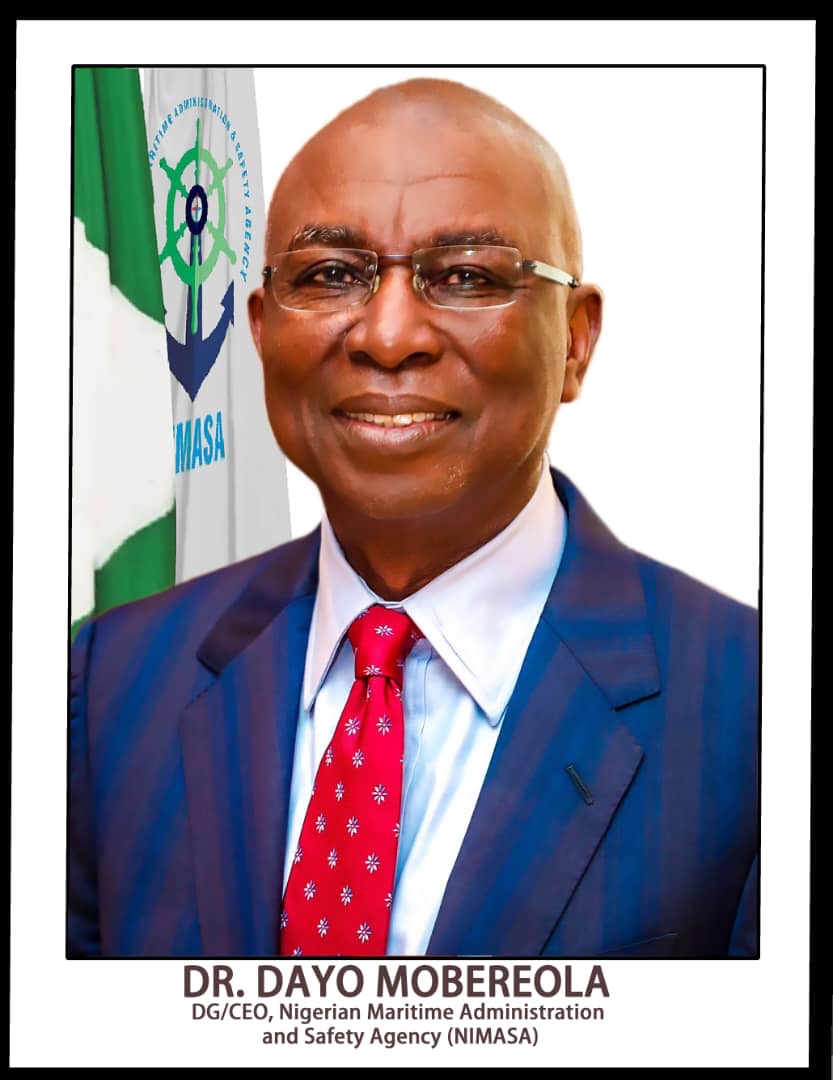
The DG, NIMASA , Dr Dayo Mobereola (4th left), the ED, Maritime Labour and Cabotage Services, Jibril Aba (1st left), President General, MWUN, Comrade Francis Bunu (6th left) and representatives of other stakeholders at the 2025 Dockworkers Day organised by NIMASA in LAGOS on November 11, 2025.
MWUN Raises Alarm Over Port Vulnerability, Demands Restoration of Tally Clerks, Gangway Security to Curb Illicit Cargoes
The Maritime Workers’ Union of Nigeria (MWUN) has warned that Nigeria’s ports are increasingly vulnerable to illicit trade and security breaches due to the absence of Tally Clerks and onboard Gangway Security men, urging the Federal Government to urgently reconstitute the workforce to safeguard the nation’s trade gateways.
The call was made by Comrade Francis Bunu, President-General of MWUN, during the 2025 Dockworkers Day Celebration held in Lagos with the theme, “Safe Port, Safe Ship.” The annual event, organized by the Nigerian Maritime Administration and Safety Agency (NIMASA), brought together regulators, operators, and workers to spotlight maritime safety and labour welfare.
Bunu said the current operational gaps in the ports had exposed Nigeria’s maritime system to potential smuggling and illegal arms importation, insisting that the disbandment of Tally Clerks — the official recorders of cargoes — has weakened cargo accountability and national security.
“The Nigerian port system is incomplete without Tally Clerks and Gangway men,” he warned. “These professionals are the eyes and ears of government at the terminals. Without them, cargo accountability becomes compromised and illicit goods can pass unchecked.”
He maintained that reinstating these key workers would restore transparency, boost revenue assurance, and strengthen Nigeria’s fight against port-related criminality.
The labour leader also raised alarm over poor safety conditions at port terminals, describing the working environment for dockworkers as “unsafe and substandard.”
“Ports in their current state are unsafe for workers,” Bunu said. “The Federal Government has approved port rehabilitation contracts, and we expect swift action to upgrade them. Safety must come first, employers should equip workers with proper protective gear and modern tools.”
Bunu emphasized that investing in safe and humane working conditions is not just a moral obligation but also a productivity driver, as “no industry can thrive when its workers live and work in fear.”
On welfare and remuneration, the MWUN boss disclosed that the Collective Bargaining Agreement (CBA) currently governing dockworkers’ pay and benefits is due for renewal. He vowed that the Union would demand a wage structure that reflects the current economic realities and the workers’ critical role in the blue economy.
“The NJIC for dockworkers will soon expire, and we are ready to negotiate firmly,” he said. “Dockworkers have been recognized by government as essential service providers; therefore, they must earn living wages. The next CBA will not be business as usual.”
The National Joint Industrial Council (NJIC) serves as the negotiation table between MWUN, terminal operators, and government agencies for maritime labour agreements.
Bunu praised Nigeria’s dockworkers for their resilience, describing them as the “foundation upon which the port economy thrives.” He also commended the collaborative efforts of NIMASA, Nigerian Ports Authority (NPA), Nigerian Shippers’ Council (NSC), and NIWA, as well as the private sector through STOAN and NASO, for supporting a more worker-friendly industry.
“Today, we celebrate the men and women whose hands keep the ports alive,” he said. “Their strength drives international trade, and their wellbeing must remain a national priority.”
In a side interview, Comrade Adewale Adeyanju, Deputy President of the Nigerian Labour Congress (NLC) and President-General Emeritus of MWUN, condemned the poor safety culture within some terminals, revealing that several recent dockworker deaths have been “swept under the carpet.”
“Safety across terminals still needs serious improvement,” Adeyanju said. “NIMASA must intensify inspections and enforce compliance. In the past, when dockworkers died onboard vessels, their families were often abandoned. We fought to stop that exploitation and protect workers’ rights.”
The veteran unionist, who led MWUN through major industry reforms, acknowledged NIMASA and NPA for stabilizing port labour relations since the 2006 concession era.
“When concessionaires first took over in 2006, dockworkers lost hope. But through collective struggle, we built the NJIC framework and restored dignity to the profession,” he said. “Today, dockworkers remain the engine room of maritime trade.”
The event concluded with a parade, award presentations, and sporting displays, celebrating dockworkers’ courage and unity — and renewing their collective call for safety, fair wages, and national recognition

+ There are no comments
Add yours